


Paris is not only the major tourist destination, but also one of very few global cities, headquartering many Fortune Global 500 companies as well as international organizations like UNESCO, the OECD, and the International Chamber of Commerce (aka Paris Club). Here are some facts about the City of Light you may haven’t heard before.
1. Huge city
Although the city itself has only 2.2 million residents, Paris’ metro area is one of the biggest in the world, housing more than 12 million people. Moreover, Paris was the largest city in the Western world for about 1,000 years, prior to the 19th century, and the largest in the entire world between the 16th and 19th centuries.
2. Centre Pompidou
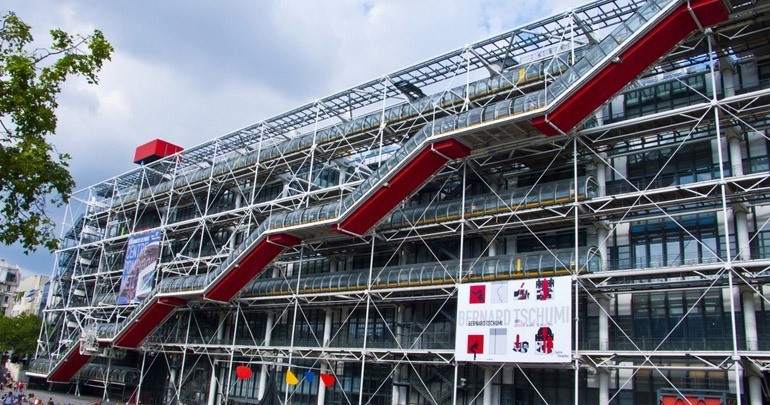

One of Paris’ best-known sights is Centre Pompidou, which full name is the Centre national d’art et de culture Georges Pompidou. It was inaugurated by the French president, Valery Giscard d’Estaing, on January 31, 1977. The three architects behind the project — Renzo Piano, Richard Rogers and Gianfranco Franchini — designed it to be an “expandable spatial diagram,” featuring utility shafts, pipes and cables attached to the outside of the building and painted in four colors: blue for air conditioning, green for water, yellow for electrical installations, and red for circulation and security. The centre houses galleries and a huge library.
3. It’s actually the new Paris you’re visiting
Even though the whole city looks pretty old, much of it is the result of the vast mid-19th century urban remodeling. Before that, Paris had been a labyrinth of narrow streets and half-timber houses, many of which have been leveled to make way for wide avenues and boulevards. Most of this “new” Paris is the Paris we see today.
4. Les Halles
Today’s Les Halles were formerly Paris’ central meat and produce market, which was transformed into a huge shopping center connecting important metro station(s): Châtelet – Les Halles, which BTW is the biggest in the world. The central market of Paris, the biggest wholesale food market in the world, was transferred to Rungis.
5. Eiffel Tower
Originally, the Eiffel Tower was envisioned as a temporary construction by Gustave Eiffel for the 1889 Universal Exposition. As we all know, the tower was never dismantled and has rather emerged as an enduring symbol of Paris.
6. The famous bridge


The Pont Neuf was the first modern bridge in Paris with no shops and markets on it. Before it was built, Parisians were never able to really see the Seine flowing underneath a bridge. To this day, Pont Neuf is one of Paris’ most famous bridges.
7. The famous cemetery
With over 1 million graves, Pere-Lachaise Cemetery is one of the most famous cemeteries in the world. Here you can find graves of such well-known people as Jim Morrison, Sarah Bernhardt, Oscar Wilde, Isadora Duncan, Edith Piaf, Chopin, Molière, Proust, Modigliani and Balzac.
8. Business district
La Défense is one of the largest business centers in the world, consisting mainly of business high-rises. French government initiated the project in 1958, which now hosts some 3,500,000 m2 (37,673,686 sq ft) of offices. The Grande Arche (Great Arch) of la Défense houses a part of the French Transports Minister’s headquarters.
9. Just how popular tourist destination it is?
Paris is one of the most visited places in the world, with its metro area attracting some 42 million people, 17 million of which are foreigners. The city’s best-known museum, the Louvre, welcomes over 8 million visitors a year alone, making it by far the world’s most-visited art museum. Paris’ cathedrals are also popular, with Notre Dame de Paris and the Basilique du Sacré-Coeur receiving 12 million and 8 million visitors, respectively. The Eiffel Tower on its end is visited by more than 6 million people every year.
10. Metro
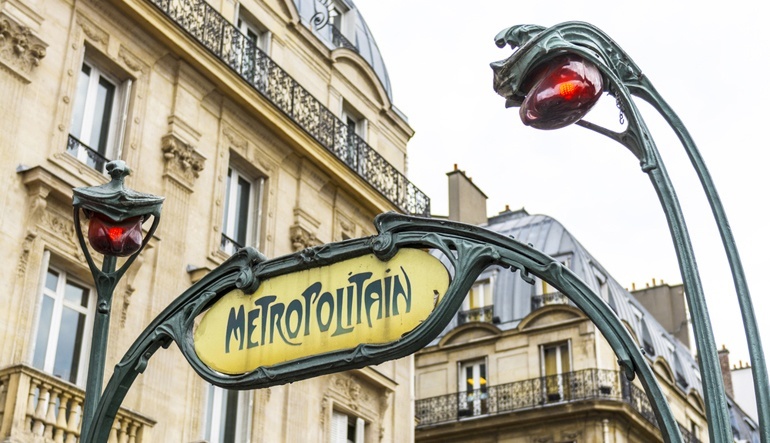

Paris’ metro is one of the best in the world, featuring 14 lines and two minor lines (3bis and 7bis). In addition, it also has the so called RER train network which 5 lines connect more-distant parts of the urban area, 4 tram lines with 6 new light rail lines currently in various stages of development.