



We’ve been telling you how blockchain technology will change and improve many industries. One of them is healthcare, which is poised to greatly benefit from the use of a public ledger, with startups in the space addressing such pain points as medical record interoperability, data security, reimbursements and pharmaceutical supply chain management.
Today we present you with a few companies that are looking to put blockchain to good use. The following 5 got the most funding, according to CB Insights data.
1. Chronicled

Focus area: Supply Chain Management
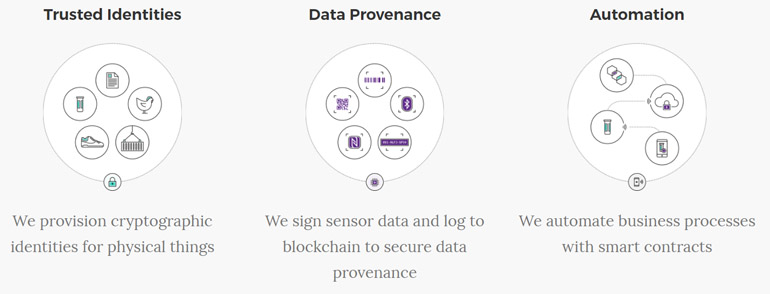
Chronicled builds special purpose blockchain-based applications for supply chain and IoT clients. The San Francisco, California-based company’s technology can sync with Quorum, Hyperledger, and Ethereum blockchain protocols and has applications ranging from medical devices and pharmaceuticals to package tracking.
One application of the Chronicled platform involves tracking of products like pharmaceuticals, blood, and human organs — which often need to be kept at low temperatures. Chronicled has developed a portable sensor that tracks and stores temperature readings on a blockchain to ensure secure data transmission.
Further, for pharmaceuticals and medical devices, Chronicled has “CryptoSeal,” a tamper-proof adhesive sticker that is used to identify physical items. At each stop in the supply chain, the seal can be scanned and verified against the blockchain registry.
2. Gem

Focus area: Reimbursements
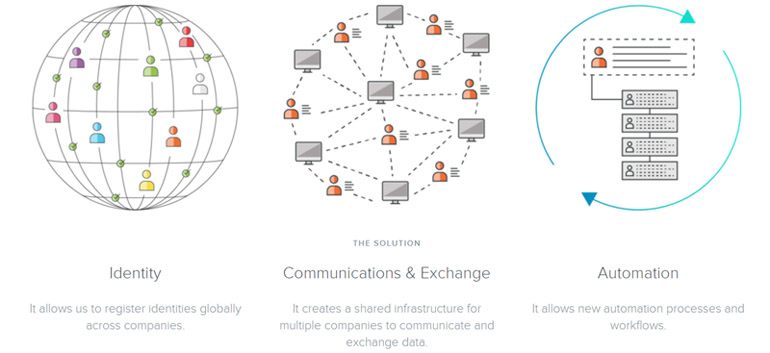
Based in Venice, California – Gem develops blockchain applications for healthcare and supply chain management. The Gem Healthcare Network, developed on the Ethereum blockchain, will add security via permissioned blockchains to let patients control access; plus, it also includes a shared ledger system in which every new change is recorded.
Initially, the company is tackling health claims management in an effort to make the process of verifying health claims and reimbursements more efficient. Gem’s platform, GemOS, will allow patients, providers, and insurers to securely view a patient’s health timeline in real-time, improving speed and transparency throughout the claims process.
The startup has partnered with Philips to explore how blockchain can be used to integrate data from other sources, including employee wellness programs and wearables.
3. Guardtime


Focus area: Health Data Security
Guardtime is one of the largest providers of enterprise blockchain-based security systems, with offices in Amsterdam, California, Estonia, Singapore, and the United Kingdom. In addition to healthcare, the company also operates in other sectors — including advertising, defense, government and financial services. Guardtime’s technology uses a Keyless Signature Infrastructure (KSI) to provide large-scale data authentication.
The company has struck a partnership with the Estonian e-Health Authority in March 2016 to secure over 1 millions patient records. Estonia is one of the tech savviest countries in the world, making it an ideal location for blockchain to be deployed. Since Estonian citizens already carry unique identity credentials that link back to their health records, a blockchain layer can be added to record and secure every interaction with their data.
4. Patientory

Focus area: Electronic Medical Record (EMR) Interoperability
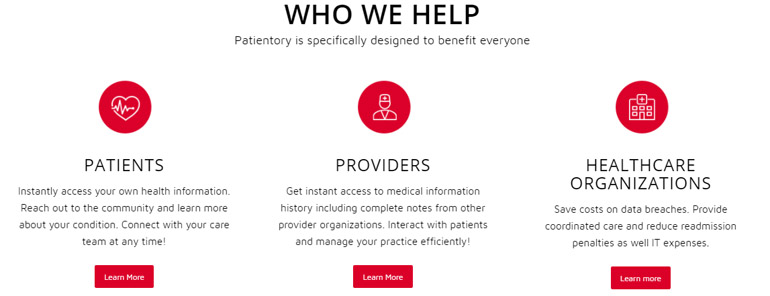
Atlanta-based Patientory is working on a HIPAA-compliant blockchain powered health information exchange (HIE) that will enable EMR interoperability and enhanced cyber-security protocols. The system has its own cryptocurrency, called PTOY, that gives users access to the platform to store and secure health information.
Patientory envisions the patient becoming the “primary intermediary in sending and receiving health information negating the need for frequent updates and troubleshooting of any software.” In other words, the patient can grant access to his/her data to healthcare institutions is then able to add new records such as ER visits, medical images, and more.
5. PokitDok

Focus area: Electronic Medical Record (EMR) Interoperability
This San Mateo, California-based company is developing APIs for healthcare verticals like claims, pharmacy and identity management. Its blockchain solution, called DokChain, is a “distributed network of transaction processors operating on both financial and clinical data across the healthcare industry.”
Introduced in October 2016, DokChain aims to provide a secure network for all sources of patient data, from EMRs to medical devices and pharmacies. PokitDok’s various APIs, as well as those provided by others, will then be detethered from the central hospital/pharmacy and instead connected by a distributed blockchain network. The company has demonstrated how DokChain can run an insurance claim eligibility check with Cigna in seconds rather than hours or days.
…
And if you’re looking for more information about blockchain in healthcare, you may want to check out this report.