

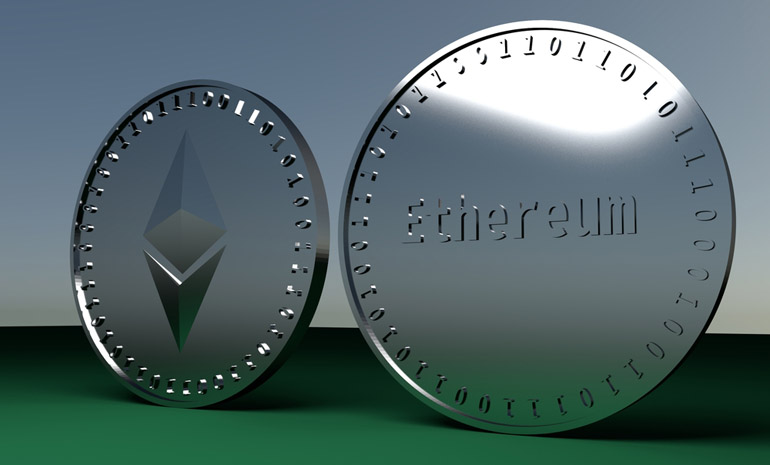

We are getting these emails from people complaining how can we write about Ethereum and other what they call “crypto-scams.” We tell them to chill out, and if they don’t like what we write — look elsewhere for content. The internet is full of interesting things, after all.
Nonetheless, we thought we should explain why we think Ethereum is not a scam, despite what some people think.
You see, there is a group of people who say Earth is flat. Also, there are those who “know” that Bitcoin is just a Ponzi scheme, and are thus concluding Ethereum must be similar.
We are all entitled to our own opinions and thoughts, and there’s nothing wrong about that. Internet is ideal for sharing one’s opinion — and that’s what we’re doing, after all.
But I’m getting ahead of myself…
Ethereum is not a scam!
It’s not even easy to mine, so it’s not free money. Sure, fortunes are made overnight, but the same was true with many other things, digital or not.
Ethereum, and all other cryptocurrencies, may not have the “real value” behind them, but the same is true for all “regular,” fiat currencies. It’s not like there is the same amount of gold as there are U.S. dollars on the market. That setup is long gone.
Every and I mean every currency out there is backed by nothing other than confidence. The government could step in when things need to be shifted in some direction, but even they can’t do much when major events occur.
Take a look at the British Pound after Brexit — it lost a big chunk of its value on the news of the UK leaving European Union.
The problem with cryptocurrencies is that there is no single body that could make these slight shifts, which in some (other) way is a good thing.
Global world needs global currency
Today, U.S. dollar is the most widely accepted currency, followed by Euro, British Pound, Japan’s Yen and so on. But we live in a global world where people and products quickly move from one side of the planet to the other. And thanks to the internet, with some services these transactions are instantaneous.
What we need is the system that will make money global, and since it would be hard — pretty much impossible — to select such currency by the governments of the world, the technology kicked in with a solution of its own.
The first such solution was Bitcoin, while Ethereum built on top of it, adding smart contracts to the mix (to enable decentralized apps).
Big companies support Ethereum
In March 2017, the Enterprise Ethereum Alliance (EEA) was created, gathering blockchain start-ups, research groups, and Fortune 500 companies. Members of this group include the likes of Cornell University’s research group, Toyota Research Institute, Samsung SDS, Microsoft, Intel, J.P. Morgan, Merck KGaA, DTCC, Deloitte, Accenture, Banco Santander, BNY Mellon, ING, and National Bank of Canada.
The EEA these aims to coordinate the engineering of an open-source reference standard and private “permissioned” version of the Ethereum blockchain that can address the common interests of enterprises across various sectors, such as banking, management, consulting, pharmaceutical, health, technology, mobile, entertainment, and more. Also, certain members of the alliance have also indicated a desire to investigate and collaborate on hybrid architectures to potentially anchor private blockchains to the public Ethereum blockchain in the future.
Banks are leading the way
Banks are among those who could benefit the most from blockchain, which is the underlying technology of any cryptocurrency, including Ethereum.
According to a recent Accenture report, the blockchain technology could save the 10 largest banks $8 to $12 billion a year in infrastructure costs — representing up to 30 percent of their total costs in the sector.
One of them is J.P. Morgan Chase which system called “Quorum” is designed to toe the line between private and public in the realm of shuffling derivatives and payments. It aims to satisfy regulators who need seamless access to financial goings-on, while at the same time protecting the privacy of parties that don’t wish to reveal their identities nor the details of their transactions to the general public.
Another example comes from Royal Bank of Scotland, which has built a Clearing and Settlement Mechanism (CSM) based on the Ethereum distributed ledger and smart contract platform.
You better jump-in soon…
You may have heard of FOMO, the Fear Of Missing Out? Many of us are in that state of mind these days…
There is a reason why cryptocurrencies have managed to grab headlines in recent months. They do offer solutions for the global world, with both small and big companies joining the trend.
The question for you — for all of us really — is whether we will join the revolution or just watch it unraveling before our eyes. And not benefit from the ride…