
 Kelly Robertson
You’ve probably heard about (if you haven’t been in) Budapest, which is the capital and the largest city of Hungary. It’s also one of the biggest cities in the region with more than 1.7 million people living in the city, and almost 3.3 million in the wider metro area. Here are 10 facts you may haven’t heard about Budapest before…
1. The name
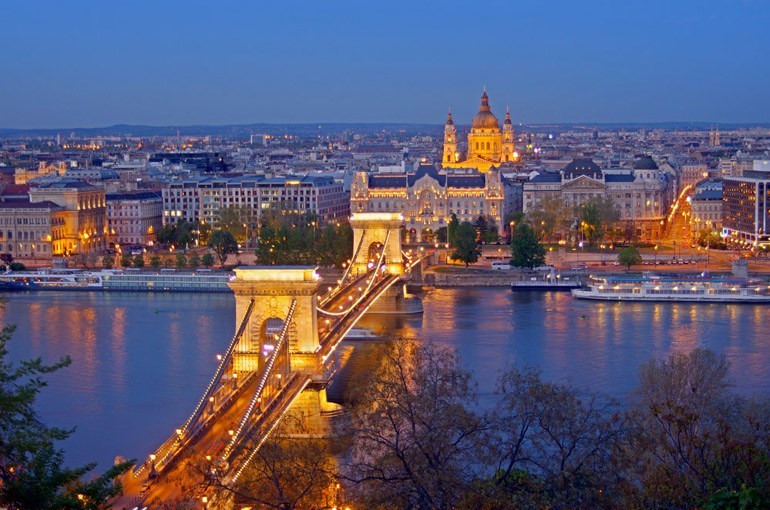
The name “Budapest” is the composition of the city names “Buda” and “Pest,” which merged along with third part Óbuda (Ancient Buda) into a single city in 1873. Even before that, the combined name appeared in 1831’s book “Világ” (“World” / “Light”), written by Count István Széchenyi.
2. Heritage
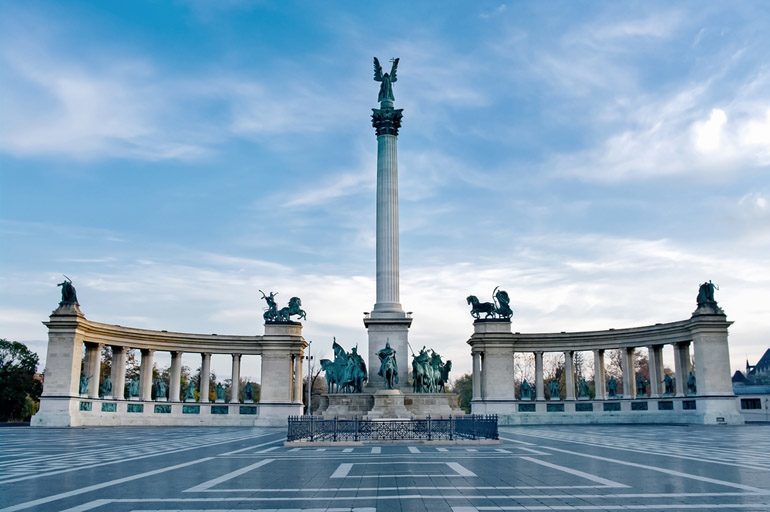
Budapest is a host to a number of World Heritage Sites, including its banks of the Danube, the Buda Castle Quarter, Andrássy Avenue, Heroes’ Square and the Millennium Underground Railway. It is also ranked as the most livable Central/Eastern European city on EIU’s quality of life index, Europe’s 7th most idyllic place to live by Forbes, and as the 9th most beautiful city in the world by UCityGuides.
3. Synagogue
Budapest’s Dohány Street Synagogue is the largest synagogue in Europe and second largest in the world (after the one in New York). Stretching 44-metres high and filling a size of over 2000 square metres, it can house some 3000 people. It was built in the mid-19th century.
4. Metro
Budapest has the second oldest metro in the world, built after the one build in London. Work on the first (yellow) metro live began in 1896. Today the city is served by 3 lines, with 4th one (green) in development.
5. Writers love it
Wannabe writers visit Budapest to sharpen their skills. The legend says that if you touch the pen of the Anonymous statue in the park just near to Heroes’ Square, you’ll become a better writer.
6. Thermal springs
The city has more thermal springs than any other capital in the world. As a result, there quite a few medicinal baths all around Budapest, which have been enjoyed by millions of people since the Roman Empire.
7. Big tram
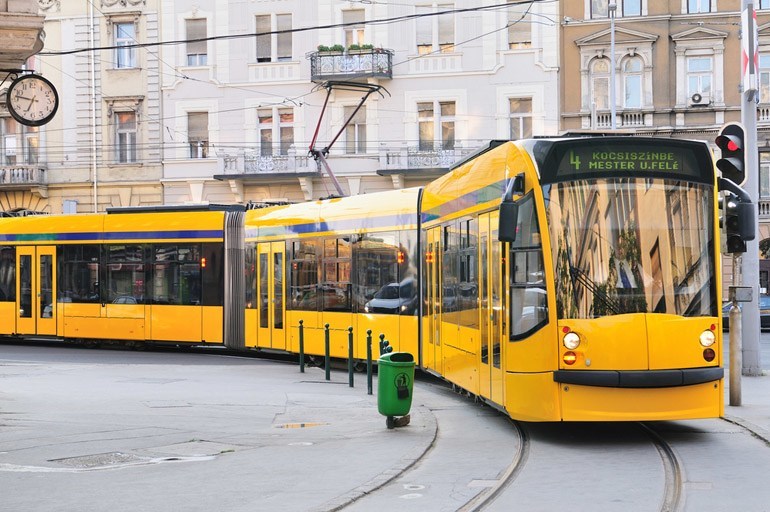
You’ll find the world’s longest passenger tram in Budapest. It’s a 54-metre (177 ft) long Siemens Combino, which run at 60 to 90 second intervals at peak time and 3–4 minutes off-peak and is usually packed with people. Aside from trams, the city’s public transportation also includes three metro lines, as well as buses, trolleybuses, suburban railway lines, a boat service, a cogwheel railway, a funicular, and a chairlift called Libegő.
8. Happiest barack in within the former Eastern block
During the communist era, Hungary was often satirically referred to as “the happiest barrack” within the Eastern block. Much of the wartime damage to the city was repaired during this period, and two metro lines (blue and red) were built. The work on Erzsébet Bridge, the last to be rebuilt, was finished in 1965.
9. China invests
Chinese are bullish on Budapest, having opened the first foreign office of the China Investment Promotion Agency (CIPA) in the city. Moreover, Hungarian capital is also a home of the European Institute of Innovation and Technology (EIT).
10. Sziget Festival
Budapest is a host to the popular Sziget Festival, which is visited by some 400,000 people. It takes place on a large Hajógyári-sziget island where both locals and tourists come to have a fun time.
As usual, you’re free to add your two cents in the comment form below. 😉
