
 Kelly Robertson
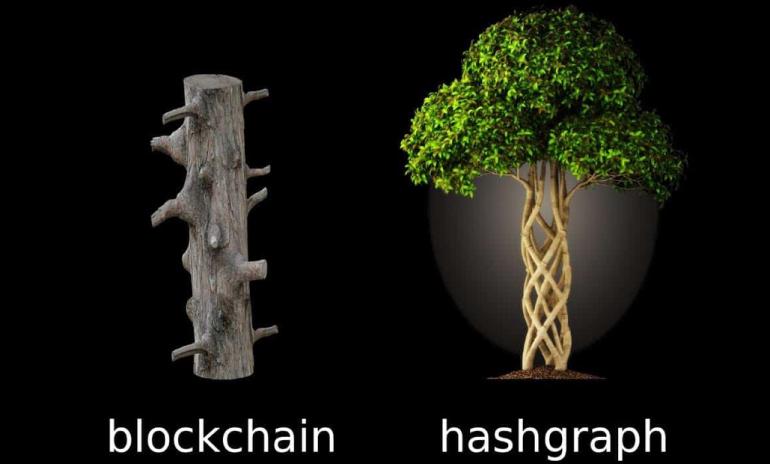
Ever since Bitcoin was announced people started talking about the “new financial world order,” one that would be decentralized and where end users would be in charge (rather than banks and institutions). That, however, hasn’t happened and chances are it won’t happen at all. Nonetheless, many people still expect major changes in the way we conduct transactions.
But, things aren’t moving that fast. Or they may be moving fast when we look at the big picture and watch at these latest trends and technologies from the historic point of view: the current financial system is old, very old – and it will take some time before its main actors are either transformed or made obsolete.
One of the factors that prevents bitcoin and many other cryptocurrencies from being adopted by the mainstream users and companies is the long time it takes to process each transaction. While Distributed Ledger Technologies (DLT) do promise to make for more transparent movement of the money, they also require more time for every transaction to be verified. This, at least, is the case with blockchains of many major networks some of which are trying to solve this with improved algorithms and new technologies.
Now, we have a new DLT contender that may end up working better than blockchain. It’s called Hashgraph and it is the subject of this article. Let’s delve into details, shall we?
What is Hashgraph?
Hashgraph is the new distributed ledger technology (DLT) with a novel consensus mechanism that is more effective than proof of work or proof of stake. This mechanism — more about it in a moment — makes Hashgraph faster and therefore better suited for everyday payments.
Said mechanism consists of two methods that are used to reach an agreement between peers who don’t trust each other. These methods are:
Gossip Protocol
Gossip protocol is the technology that randomly spreads the transaction info across all nodes in the network, from where those other nodes do the same — spread the old info alongside the new transaction info. The information shared to other nodes includes details on “what” has happened, “who” are the actors and “when” the transaction took place. This way every node gets to learn the history of “what,” “when” and “who” about every individual transaction.
Virtual Voting
When every node on the network gets “what,” “when” and “who” details, they can perform a virtual voting at their native node itself to reach to the finality of orders of the transactions. This is the reason why Hashgraph has the word “graph” in it, because once every node is informed and have decided about the finality, all the events that occurred look like a graph on a time-based event line.
Also, through this process – Hashgraph achieves the penultimate security standards known in maths as “asynchronous Byzantine fault tolerant.”
Hashgraph is a patented technology but it’s going to be public with the launch of its first implementation called Hedera Hashgraph. The company’s team includes computer scientists and mathematicians, as well as marketing and business development folks.
What makes Hashgraph better than Blockchain?
Blockchain is not without its flaws, though it has many great use cases. For conducting peer-to-peer transactions, Hashgraph is arguably the better technology, as it is:
- Scalable – supports up to 250,000 transactions per second.
- Secure & stable – thanks to the use of asynchronous Byzantine fault tolerant
- Regulatory compliant – it stores data on a distributed ledger so it can be easily audited.
Hedera Hashgraph
Hedera Hashgraph will be the public implementation of Hashgraph technology; it is currently in the pre-ICO phase, and once out – Hedera will include support for distributed applications (DApps).
Also, Hedera Hashgraph will have its own native cryptocurrency, which can be “staked” and/or used to run a node (i.e. for adding CPU to the Hedera public network), thereby providing the network security within the public ledger.
Here’s Hedera’s promo video:
Conclusion
Hashgraph is a promising technology but whether it will fly is a whole different matter. Simply put, many companies from all around the world have already committed resources to blockchain and they may not be that willing to switch gears now.
Then again, the entire DLT space is still nascent, leaving room for new players to join in. Hashgraph certainly “has what it takes” to emerge as a viable player in the industry and it will be interesting to watch how it competes with other technologies. We’ll make sure to keep you posted about everything interesting happening in this space, so stay tuned.
