
 Kelly Robertson
Online exchanges are not enough for some people. There are those who want to interact with physical machines so they could “touch” the money, so to speak.
We have ATMs for regular, fiat currencies, and we also have them for Bitcoin and a few other cryptocurrencies. Generally speaking, a Bitcoin ATM will also “work” with a few of the most popular tokens, such as Bitcoin (obviously), Ethereum and Litecoin.
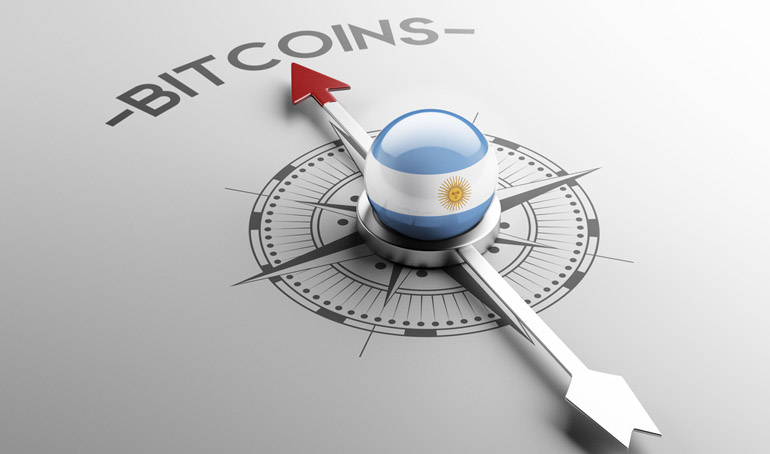
After Ukraine, we have Argentina joining the Bitcoin ATM craze with one group promising to install no less than 200 of these machines as a response to what they call the “world monetary order changing.”
Odyssey Group is the name of the company planning this endeavor, saying there would be multiple benefits of Bitcoin ATMs in a country where economic policy was an early driver of consumers towards Bitcoin.
“The idea was born from the understanding that the world monetary order is changing,” Sebastian Ponceliz, CEO Odyssey Group, told the local news outlet CryptoNoticias. “There is what I call monetary convergence that makes us use different types of means of payment and exchange (cash, crypto, e-wallets, loyalty points, etc.) and the human contact point for that is an ATM that can transact multiple currencies, turning digital money into physical and vice versa.”
What makes these ATMs more interesting than the majority of machines installed in other parts of the world is that they can operate with both fiat and crypto currencies simultaneously.
“Odyssey is the first global platform integrating fintech, cryptocurrency and cash,” Ponceliz added.
Nonetheless, we know that Bitcoin ATMs come with notoriously high fees and we often wonder why would anyone use them over online exchanges. Sure, they allow users to get money when they badly need it, but some planning beforehand can accomplish the same thing without paying the “ATM premium.” But still, these ATMs keep popping up like mushrooms after the rain.
Or it could have something to do with Argentina itself? Which leads us to the next section…
Argentina adopting blockchain tech
The rise of Bitcoin in the country also had an impact on the adoption of its underlying technology – blockchain. One startup, called Consentio, is looking to digitize certificates in the blockchain as transparently as possible, to make it clear who and under which circumstances got his/her diploma.
Academic fraud is serious concern in Argentina where even the former president, Cristina Fernández de Kirchner, is thought to have forged her academic diploma. Also, there was a report accusing one doctor of practicing medicine for 42 years while using someone else’s diploma, as well as a football team’s physician being exposed as an impostor when the real doctors in the ambulance recognized him as a male nurse.
Beyond diplomas, Consentio is also working on a blockchain-based notarization platform called Signatura to provide an easy way to certify and validate documents with no requirement to trust on third parties.
The service was first tested with dozens of lawyers and launched after they expressed interest in using it.
Signatura also offers an API that could extend the platform uses cases to audits, eGovernment platforms, access control logs, transparency solutions, and more.
Uber played a role in Argentina’s Bitcoin adoption
It was in mid-2016 when the Argentinean government blocked credit card companies from dealing with Uber, causing the ridesharing company’s national branch to switch to Bitcoin payments.
At that time, Uber has teamed-up with Swiss Bitcoin company Xapo to enable payments through Bitcoin debit cards, for which the company offered a $30 discount.
It is important to add that Uber’s users are not what we would consider mainstream consumers, but the move of one of the world’s most famous startups to embrace Bitcoin played a role in making the cryptocurrency more popular in the country.
“In general Uber users are highly knowledgeable about technology and more prone to Bitcoin understanding and usage, fears about Bitcoin usually come from more illiterate users,” said Diego Gutierrez Zaldivar, President of Bitcoin Latam and CEO of RSK Labs.
Nonetheless, Uber kept its local branch in Buenos Aires which in turn has tried for several times to block the service from operating in the city. But that’s another story…
Stringent restrictions helped Bitcoin prosper
Back in October 2011, then Argentinean President Cristina Fernández de Kirchner announced stringent restrictions to buy foreign currency and to send money overseas. And what do you know, people flocked to Bitcoin to escape government controls, helping make Argentina one of the countries with the biggest cryptocurrency adoption.
Today, the country has a new president, Mauricio Macri, who reversed the monetary restrictions, and announced support for startups. Today, blockchain tech entrepreneurs are confident this won’t reverse the cryptocurrency trend in the country.
“Bitcoin is not a tool to avoid taxes or wage a guerrilla-style, economic war against a corrupt government subjugating a whole country,” Nubis Bruno, managing partner of Bitex.la SRL, a Bitcoin exchange and remittances company, told Cointelegraph: “It’s better to regard it as a solution to the structural problems of the financial system.”
Argentina tops the charts
The country hosts the largest Bitcoin community in Latin America, and is home to dozens of entrepreneurs that have launched diverse startups.
Also, over a hundred shops and professionals accept Bitcoins in Buenos Aires, including dentists, law firms, cafes, and bed and breakfasts, though most Bitcoin users are still independent professionals and companies using the cryptocurrency for international transfers.
Recently, Central Bank First Deputy Governor Lucas Liach took part in a Bitcoin panel and expressed mixed opinions on the cryptocurrency; he did note his interest in “adopting the Blockchain technology” for the monetary authority.
The Bitcoin Market Potential Index (BMPI) from last year has put Argentina at the very top of the list, followed by Venezuela, Zimbabwe, Malawi and the United States.
So the country is well suited to pursue the “blockchain future,” what about you? Have you “bought in” or you’re still watching it unfolding before your eyes?
