
 Charles H. Miller
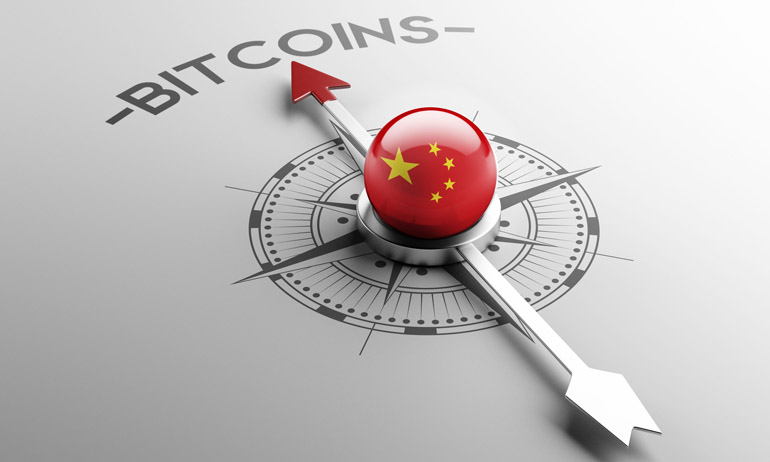
China’s central bank has issued an immediate ban on Initial Coin Offering (ICO) funding, which involves creating and selling new crypto tokens — commonly based on Ethereum — to investors.
The country’s leading financial authority says that ICOs have “seriously disrupted the economic and financial order,” and — at least for the time being — they won’t be allowed in the world’s most populous nation.
To enforce these rules, the Bank’s committee has prepared a list of 60 exchanges which will be subject to inspection. Two of largest such sites, ICOage and ICO.info, have already suspended their services and stopped taking on new projects, though both said their suspensions were voluntary.
The Chinese authority has also voiced concerns that some ICOs are financial scams and pyramid schemes.
Moreover, it is not the only one voicing concerns over the growing number of ICOs, with SEC issuing official warnings around the risks associated with public coin offerings, as well.
Also taking such stance is Singapore’s central bank, MAS, which even said that ICOs are “vulnerable to money laundering and terrorist financing risks due to the anonymous nature of the transactions.”
However, for the time being SEC and MAS haven’t straight out banned ICOs.
ICOs have been growing like crazy
This year was a booming year for ICOs, with the total amount raised from token sales surpassing early stage investment spending from traditional venture capitals during the first half of 2017, according to a Goldman Sachs report.
To date, ICOs have managed to raise $1.6 billion, and a big chunk of that sum went to Chinese companies; according to state media firm Xinhua, local firms managed to secure $383 million from 105,000 investors during the first half of the year.
New era for cryptocurrencies
The world’s most populous country also houses one of the world’s most active bitcoin communities, and any move there will be felt around the globe. In that sense, we may watch the potential fall out of this crackdown on the market for ICOs, and cryptocurrencies generally, given the prominent role played by China.
Nonetheless, chances are ICOs will continue, though some regulatory framework could be put in place. At the very least, a private initiative could step in to do some semi-regulation in the behalf of government, vouching that behind certain ICOs are real people working on real products.
On the other hand, this could be a temporary measure to calm down the market and prevent the bust. If you recall, in 2013 – China banned exchanges from allowing people to buy bitcoins and other cryptocurrencies using Yuan. The result was a huge price drop, but support for Yuan deposits did return and the price of bitcoin has ever since soared.
China is still look to benefit from blockchain
China is looking beyond ICOs to take advantage of the blockchain technology.
Last month, representatives from the country’s central bank and several research organizations visited San Francisco to find out more about it.
The trip included Yao Qian, director of the People’s Bank of China’s Digital Currency Research Institute, along with delegates from fintech research bodies like Shanghai New Financial Research Institute (SFI) and Peking University Digital Finance Research Center (IDF) who met with local startups at the end of August.
The delegates met Prosper, a lending company; Sofi, a personal and student loan provider; blockchain startup Circle; cryptocurrency exchange service Coinbase; and DLT payments firm Ripple.
Additional conversations were reportedly centered around regulation.
We can only guess that this ban of ICOs has something to do with that trip, though that’s not necessarily the case. Chances are that China will be watching the (digital asset) market and act according to its interests. So far, those interests worked in bitcoin’s favor, and we can only hope that will remain the case in the future, as well.
