
 Charles H. Miller
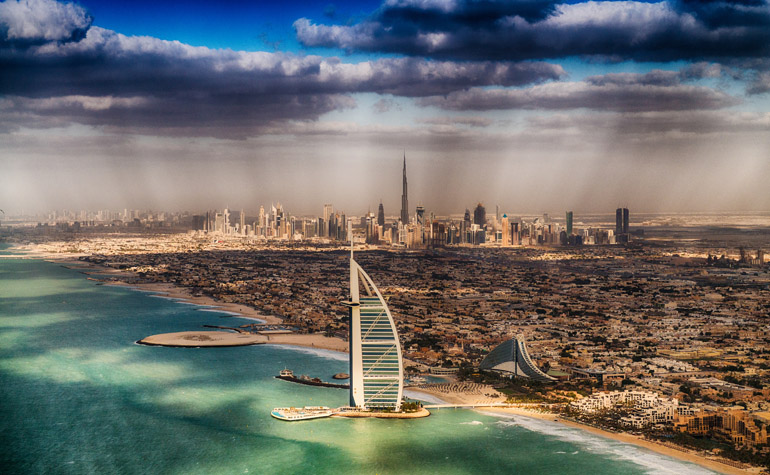
Dubai is already one of the world’s hotspots for many industries, energy obviously being one of them. The oil-rich nation, however, doesn’t want to sit on its laurels and is looking to invest its wealth beyond fancy buildings. More than that, it wants to make sure Dubai and the wider United Arab Emirates remain relevant long after they run out of oil or when the whole world turns to other forms of energy.
So they have unveiled…
The Dubai 10x initiative
As part of the abovementioned efforts, the city of Dubai has launched the Dubai 10x initiative during last year’s World Government Summit. The initiative aims to help Dubai “be 10 years ahead of other world cities” by embracing “disruptive innovation as a fundamental mantra of their operations and to seek ways to incorporate its methodologies in all aspects of their work.”
Dubai’s overall goal is to become the first Blockchain government by 2020. To that end, the Dubai 10x project will “[usher] in a new phase of development for government services by transforming a whole host of innovative ideas into reality,” according to Helal Saeed Almarri, the director general of Dubai Tourism.
Using blockchain for the tourism industry
One of Dubai 10x plans, called the Dubai Tourism Blockchain Marketplace, will include the launch of an “additional distribution channel for hotels” in the next two years. Said marketplace will rely on a distributed ledger to connect all tourist organizations involved in planning a trip, providing guests with transparent, real-time pricing and choice in Dubai’s tourist inventory.
As a result, the Dubai Department of Tourism hopes that such technology will “deliver value to Dubai in terms of higher and faster visitor conversion, and greater GDP impact.”
On the other hand, the same service will allow smaller organizations equal opportunity to attract tourists and increase employment in the Dubai tourism sphere as a whole.
In order to execute on the idea, the Dubai Tourism Blockchain Marketplace will maintain communication with government regulators while implementing the new initiative.
Tracking vehicle lifecycles with blockchain
Another blockchain project, formed in connection with the Dubai 10x initiative, comes from Dubai’s Roads and Transport Authority (RTA), which wants to use a distributed ledger for a vehicle lifecycle management system.
Planned to be launched in 2020, said system would provide customers with a history of their vehicle from “the manufacturer all the way to the scrap yard,” according to a local news outlet Arabian Business.
The initiative will start by covering all cars in Dubai before expanding to the rest of the United Arab Emirates. Once launched, it will likely be the world’s first government platform that can provide a genuine record of a vehicle’s history.
“The platform benefits many stakeholders including car manufacturers, dealers, regulators, insurance companies, buyers, sellers and even garages, providing transparency and trust in vehicle transactions, preventing disputes and lowering the cost of services,” Mattar Al Tayer, the chairman and executive director of the RTA, said in a statement. “It tracks ownership, sale, and accident history to create smart, more efficient systems for supply chains.”
The RTA will work with IBM on the project, as well as Dubai Customs, Dubai Police, the Dubai Department of Economic Development, the Emirates Authority For Standardization and Metrology, Emirates ID, and the Ministry of Interior.
Dubai wants to become a blockchain tech hub
Dubai has also mulled an idea to release its own cryptocurrency, emCash, and has hosted a government-backed training program for Ethereum Blockchain developers in collaboration with a Brooklyn-based Blockchain company.
Nonetheless, both Dubai and the United Arab Emirates issued several warnings to the public about the risks involved in Initial Coin Offerings (ICO) and the use of cryptocurrencies as legal payment.
So it’s a mixed bag, though the one that looks quite promising. Don’t you think?
