
 Charles H. Miller
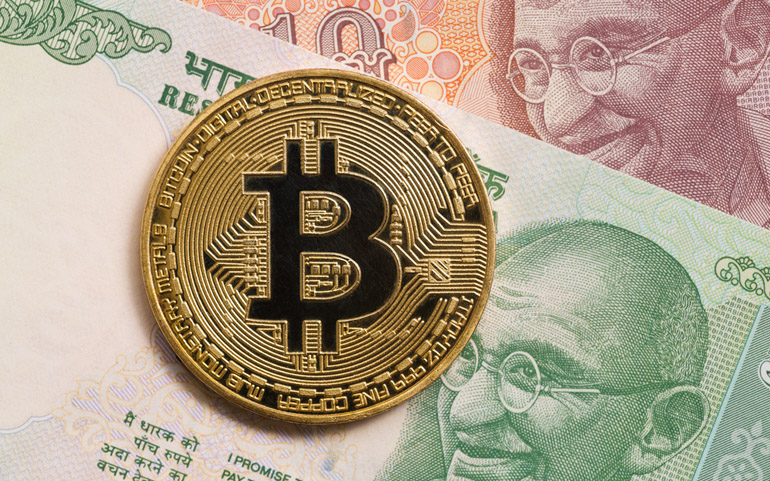
India is a huge market for Bitcoin and other cryptocurrencies. Heck, with population of 1.3 billion people, the country is a huge market for just about any product or service; so whenever they say something about crypt-assets, we tend to listen.
Today’s story looks at one recent proposal from a representative of the country’s central bank, the Reserve Bank of India (RBI), mulling the idea of a digital rupee. Also, we look at some other blockchain-related news coming from the big South Asian country. Let’s delve in, shall we?
Digital Rupee as an alternative
Lately, we’ve caught this piece on the Economic Times saying that RBI is considering to issue its own digital fiat currency as an alternative to Bitcoin. The bank (obviously) doesn’t like Bitcoin, Ethereum and similar assets, calling them “private currencies.”
“As regards non-fiat cryptocurrencies, I think we are not comfortable,” the central bank’s executive director Sudarshan Sen said. “Bitcoins for example. That’s a private cryptocurrency. Right now, we have a group of people who are looking at fiat cryptocurrencies. Something that is an alternative to the Indian rupee, so to speak. We are looking at that closely.”
Hear that? Sudarshan is talking about a digital rupee, which may or may not use a public ledger, yet have the official government backing. Sounds like a crypto-dream coming (crypto) true, but chances are we’re still years away from anything similar “hitting” the market.
The government is cautious, though
The RBI has previously issued several warnings to the public about the use of digital currencies, arguing they present “potential financial, consumer protection, legal, and security-related risks.”
Said warnings haven’t scared anyone, with India still being one of the key markets for just about any cryptocurrency on the planet. Quite the contrary, several media reports claimed that cryptocurrencies are becoming increasingly popular to investors… And even more people have joined the ride ever since Donald Trump became the president of the United States — which saw many cryptocurrencies appreciating in value.
So for the time being, cryptocurrency “hype” is still alive in India…
Some regulation could take place, though
As part of its effort to “legalize,” or at very least put cryptocurrency under (semi) control, the RBI has established a task force that will assess the possible granting of legal tender status to virtual currencies. The central bank is eyeing to draft a regulation in the near future, and perhaps as part of that regulation, we may also see the emergence of a digital rupee.
We can’t imagine India straight out banning cryptocurrencies, and chances are this regulation will be a good thing. As long as they don’t ban things — including ICOs — we may see the country emerging as one of the hottest places to do business involving the blockchain technology. That being said, we are still speculating here and we’ll have to wait a little longer to get something official from the RBI.
Right now, we know the RBI thinks the potential of cryptocurrencies is overstated, but their hearts could change when they see what other countries are doing — namely Canada, Australia and Switzerland. Also, the central bank may decide to listen to its own startups involved with Bitcoin or the blockchain technology, which have appealed to the government to adopt a more inclusive stance for digital currencies.
They urged the government to clarify the exact legal status of the technology and cryptocurrencies in order to enlighten the majority of consumers who are still confused on the issue.
In the meantime, we have seen…
India embracing the blockchain technology
The State of Andhra Pradesh, which is the seventh largest Indian state with 50 million citizens, has partnered with the blockchain security company WiseKey to help manage the privacy of citizens’ personal information being stored on state databases.
The solution will be compatible with the government-issued protocols for personal privacy, enabling users to protect and/or share information at their discretion; moving forward, the idea is to expand the platform’s use cases in the future.
“We are looking towards WiseKey to play a leadership role in providing cyber-security for the various initiatives of the government, but also drawing out the vision for smart cities who want to go beyond IoT, automation and use ‘Deep Tech’ algorithmic technology,” JA Chowdary, Special Chief Secretary & IT Advisor to the Chief Minister of the Government of Andhra Pradesh, said in a statement.
In addition, Andhra Pradesh along with the state of Telangana is looking to advance projects aimed at integrating blockchain technology in their land registry systems. The projects are part of the digital reworking of the land registration process in both states.
Moreover, the Telangana government is also planning to use blockchain to improve the operations of its Revenue Department; this project will be supported by India’s Center for Development of Advanced Computing (C-DAC).
Finally, we have seen the State of Karnataka exploring the use of technology in public sector, while at the same time looking to establish a new legal framework for virtual currencies to prevent rising cases of fraud.
Conclusion
Whatever India decides to do regarding cryptocurrencies will be felt all around the world. We have seen what happened when China banned ICOs — the entire market fell — and the same could happen if India takes a similar (tough) stance. Hopefully that will NOT be the case, and in the meantime we expect them to keep embracing the underlying technology (blockchain) in the public sector.
Also in the meantime, you should decide for yourself whether this “crypto-thing” is for you — as in: will you be buying some cryptocurrencies — or watch them making fortunes for other people. It’s totally up to you. 😉
