
 Marc Serafino
The most advanced weather satellite ever built has been launched as part of an $11 billion effort to revolutionize forecasting and save lives.
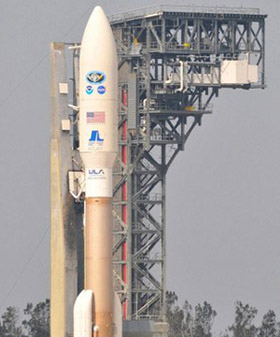 This new GOES-R satellite will track U.S. weather in great detail, including hurricanes, tornadoes, flooding, volcanic ash clouds, wildfires, lightning storms, even solar flares. And, unsurprisingly, some 50 TV meteorologists from around the country converged on the launch site.
According to the National Oceanic and Atmospheric Administration’s director of satellites Stephen Volz, the new satellite is a “quantum leap above any satellite NOAA has ever flown.”
“For the American public, that will mean faster, more accurate weather forecasts and warnings,” he said. “That also will mean more lives saved and better environmental intelligence for government officials responsible for hurricane and other evacuations.”
And now the part we intimately care about – air travel: improved forecasting will help pilots avoid bad weather, making flying that much more enjoyable (as in – less turbulent).
The satellite — valued by NOAA at $1 billion — is aiming for a 22,300-mile-high equatorial orbit. There, it will join three aging spacecraft with 40-year-old technology, and become known as GOES-16. After months of testing, this newest satellite will take over for one of the older ones. The second satellite in the series will follow in 2018. All told, the series should stretch to 2036.
GOES-R’s premier imager will offer three times as many channels as the existing system, four times the resolution and five times the scan speed, said NOAA program director Greg Mandt.
Typically, it will churn out full images of the Western Hemisphere every 15 minutes and the continental United States every five minutes. Specific storm regions will be updated every 30 seconds.
This next-generation GOES program includes four satellites, an extensive land system of satellite dishes and other equipment, and new methods for crunching the massive, nonstop stream of expected data.
GOES stands for Geostationary Operational Environmental Satellite. The first was launched in 1975.
[Via: CTVnews]
