
 Charles H. Miller
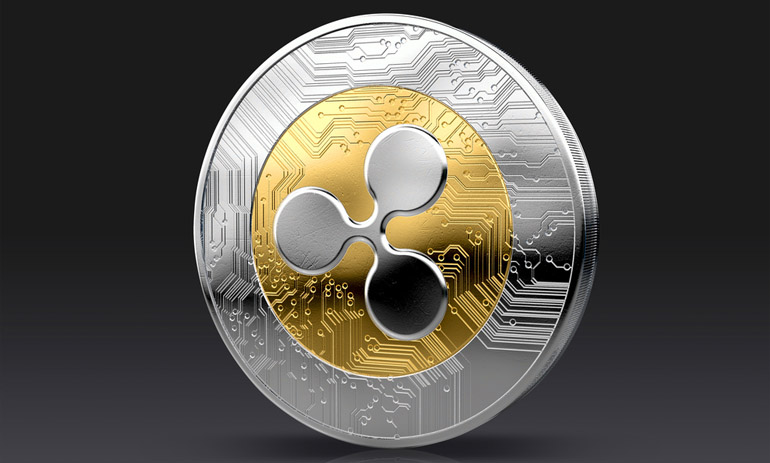
China may be increasing crypto regulations, but that doesn’t mean there’s no room for Ripple, which uses blockchain to deliver much faster and more efficient transactions.
And so the company [Ripple] has scored a deal — it’s a partnership, actually — with LianLian International, a China-based payment services provider. That move has, according to Ripple CEO Brad Garlinghouse, “just opened the door to the largest e-commerce market in the world.”
LianLian on its end will be able to offer faster and more affordable cross-border transactions to their customers across the US, Europe, and China. The Chinese firm will rely on Ripple’s RippleNet, which is a decentralized global network made up of banks and other financial institutions that handles the real-time confirmations of financial transactions.
Also, it will use Ripple’s centralized software payment solution, xCurrent, that allows banks to confirm payment details in real time before each transaction and after each delivery.
“With RippleNet, we will further enhance that experience and increase our market share by offering customers instant, blockchain-powered payments across the 19 currencies that we currently support,” Arthur Zhu, CEO of LianLian, said in a statement. “We look forward to working with Ripple to power payment flows between China and RippleNet members in new markets.”
LianLian is already working with PayPal and Apple, serving marketplaces such as Amazon, Ali Express, and Ebay.
MoneyGram is also working with Ripple
Just recently, MoneyGram has announced a pilot to test XRP, the native digital asset of Ripple’s XRP Ledger, to solve on-demand liquidity. XRP is dubbed the most efficient digital asset for payments with transaction fees at just fractions of a penny, whereas it costs around $30 per transaction on the Bitcoin network. Also, the average transaction time for XRP is 2-3 seconds while other top digital assets range from 15 minutes to an hour.
Also, whereas the current model for sending money via MoneyGram requires money transfer companies to use pre-funded accounts across the globe to source liquidity, using Ripple and its near-instant money transfer capability could eliminate the need for these pre-funded accounts.
In addition, the partnership would enable MoneyGram to better understand how blockchain technology and XRP can improve the efficiency of their global treasury operations and consumer experience.
Other companies are also testing out Ripple
American Express is one of them; together with Spanish bank Santander, it has established the so called “Ripple corridor” between the U.S. and England to connect Amex customers using U.S. dollars to Santander bank accounts in the UK using British pounds. The integration routed non-card payments through the shared payment network for nearly instant, auditable cross-border payments.
Ripple did something similar with Swedish bank SEB to establish a corridor between Stockholm and New York City which has already conducted more than $600 million-worth of transactions. That corridor, however, doesn’t include the use of the XRP cryptocurrency; rather, it was “a direct connection,” with no intermediary cryptocurrency.
Ripple has over 100 customers around the world, supported by its offices in San Francisco, New York, London, Luxembourg, Mumbai, Singapore and Sydney.
