
 Kelly Robertson

Yes, it is hard to avoid all those special deals merchants are putting in front of our faces every day. Some of them are even touted as “once in a lifetime” deals, but they seldom are.
All of us should know how to fight the impulse to spend; that impulse is even harder to control while in the store when we are surrounded with a number of special deals and “limited time offers.”
We are on the same side, and have selected the following 11 tricks to help you delay and even cancel the purchase while in the store. These are all “quick fixes” that will help you control your spending. I know they helped me.
Ask these questions before adding an item the cart
1. Do you really need it?
The first question you should ask yourself is – “do I really need this?” Related to that one, “how will owning this affect my life?” and “what happens if I don’t buy it?” Chances are nothing bad will happen, so take it slowly.
2. Is it on your list?
We always advise users to prepare a shopping list before going to the store. If something’s not on the shopping list, don’t buy it. No matter how good the deal is, chances are this isn’t the last time you’ll be able to buy for that price.

3. Do you have a place for it?
If it’s not something you eat but something that will have to be placed in your closet or on the table, think about whether you have enough space for it. Would you have to rearrange things in order to accommodate this new item? Is it worth the effort?
4. Ask for advice
Send message to someone for a second opinion. The simple “do you think I should buy this?” text with an image sent to the spouse, friend or colleague could help a lot. You’ll be best off by sending the message to the most frugal person you know.
5. Check the price
You have a smartphone, so use it. Perform a quick online search for the item you are looking to purchase and see if someone’s offering it for less. Amazon’s app has such capability built-in — use it to your advantage. Also considering searching through eBay.
6. Would you work for it?
Say you earn $20 per hour, and say that the item you are looking to buy costs $80. Would you work 4 hours to get it? If the answer is “no” — don’t buy it. Otherwise, consider using some other tactic before spending your hard-earned cash. 😉
7. Is there a more affordable option?
Some items have their lower-cost versions, and in many cases these downgraded products get the job done equally well. Perhaps you don’t need all the latest bells and whistles, or some extra features the more expensive version offers. Or — depending on the product category — you may “get away” with a generic version.
8. Is there an unbranded version?
Related to the previous point, see if there is the same product made by a less-known company. Or is there a store-brand version of the same product. These typically cost much less, but again — get the job done. And will thus save you some money.
9. Do you have a coupon for it?
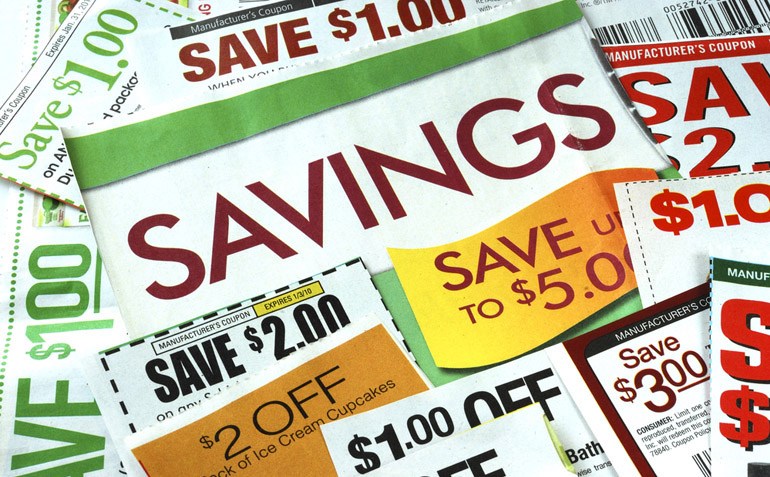
Can you postpone your purchase until you get a coupon for the item you are looking to buy? Or can you use some other coupon to get a discount on the entire purchase? Or can you wait for this item to go on sale? In most cases, there is no need to pay the list price.
10. Skip the extended warranty
If an item you are look at can be bought with an extended warranty — don’t get it. It is said that these kinds of “services” are simply used to get more money out of your pocket. And besides, some credit cards offer extended warranty free of charge (or as part of their annual fee).
11. Decline add-ons and size upgrades
Another money-taker for merchants, very related to the previous point. Know what you want and decline all add-ons that will make the price higher. If you’re not sure what you want, don’t buy it. Do the research first.
Also read: 12 Things Americans Waste Their Money On
Your turn…
Do you have some tip to share? What do you do to control your spending while in the store? Comments form is all yours…
